World · India Bureau
The Eight Divine Companions of Radha: Spiritual Significance in Hindu Tradition
In the devotional traditions of Braj and Vrindavan, the Eight Sakhis or companions of Radha hold a central place in the worship of Radha-Krishna. These divine figures embody the virtues of selfless service and unwavering devotion.
LSN India ·
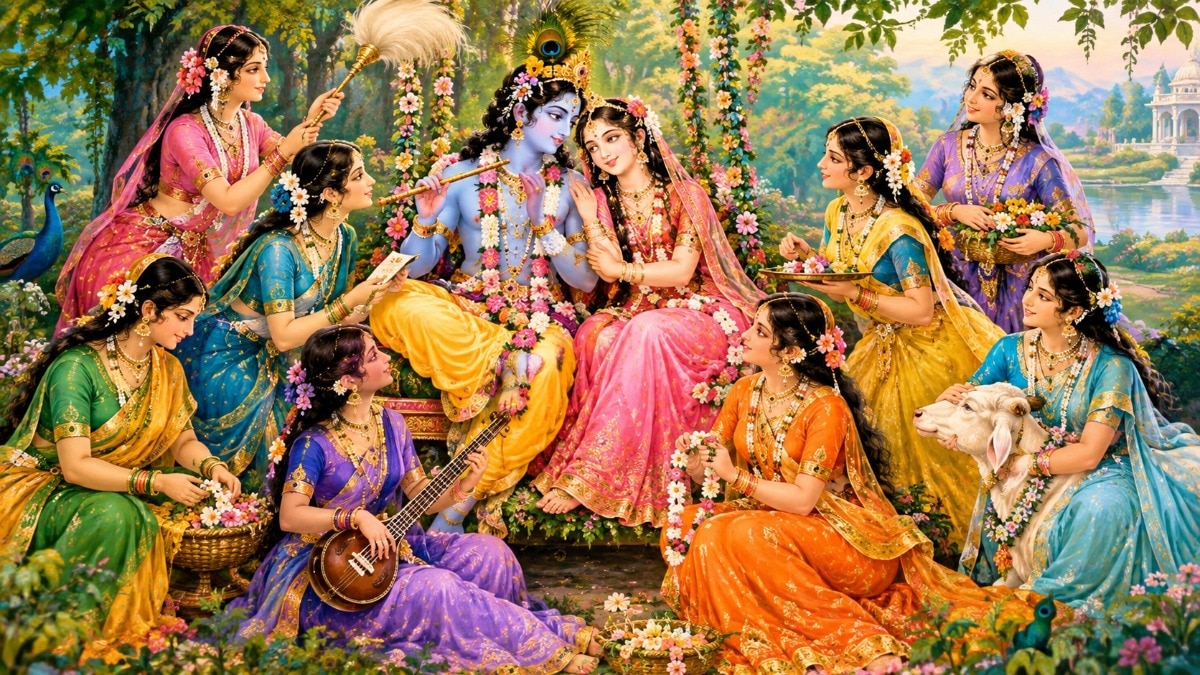
The Eight Sakhis, or female companions of Radha, represent essential spiritual dimensions within Hindu bhakti tradition, particularly in the sacred regions of Braj and Vrindavan. According to classical texts and devotional literature, these celestial attendants are considered integral to the complete veneration of Radha and Krishna, with their worship believed to be incomplete without remembrance of these divine associates.
In Vaishnava theology, each of the Eight Sakhis embodies specific virtues and spiritual qualities. These companions are revered not merely as mythological figures but as exemplars of devotional ideals, demonstrating principles of selfless service, unwavering loyalty, and complete dedication to their divine charges. The devotional narratives surrounding them emphasize these higher spiritual lessons applicable to practitioners of all backgrounds.
The significance of the Eight Sakhis is particularly emphasized during Radha Ashtami, the sacred occasion celebrating Radha's birth. This observance provides devotees an opportunity to reflect upon and understand the deeper spiritual meanings associated with these figures. Their stories, as preserved in traditional texts and through oral transmission in temple communities, continue to inspire contemporary practitioners seeking to deepen their spiritual practice.
Scholar and devotional communities maintain that comprehension of the Sakhis' roles enriches one's understanding of the broader Radha-Krishna narrative within Hindu philosophy. Their veneration during festivals and regular worship practices represents a fundamental aspect of Braj Bhakti tradition that has persisted for centuries across generations of devotees.