Business · Bangladesh Bureau
Thirteen banks maintain non-performing loan ratios below 5 percent
A dozen financial institutions have successfully kept their non-performing loan portfolios below the 5 percent threshold, reflecting improved asset quality across select banks. The performance highlights varying levels of credit management effectiveness within Bangladesh's banking sector.
LSN Bangladesh ·
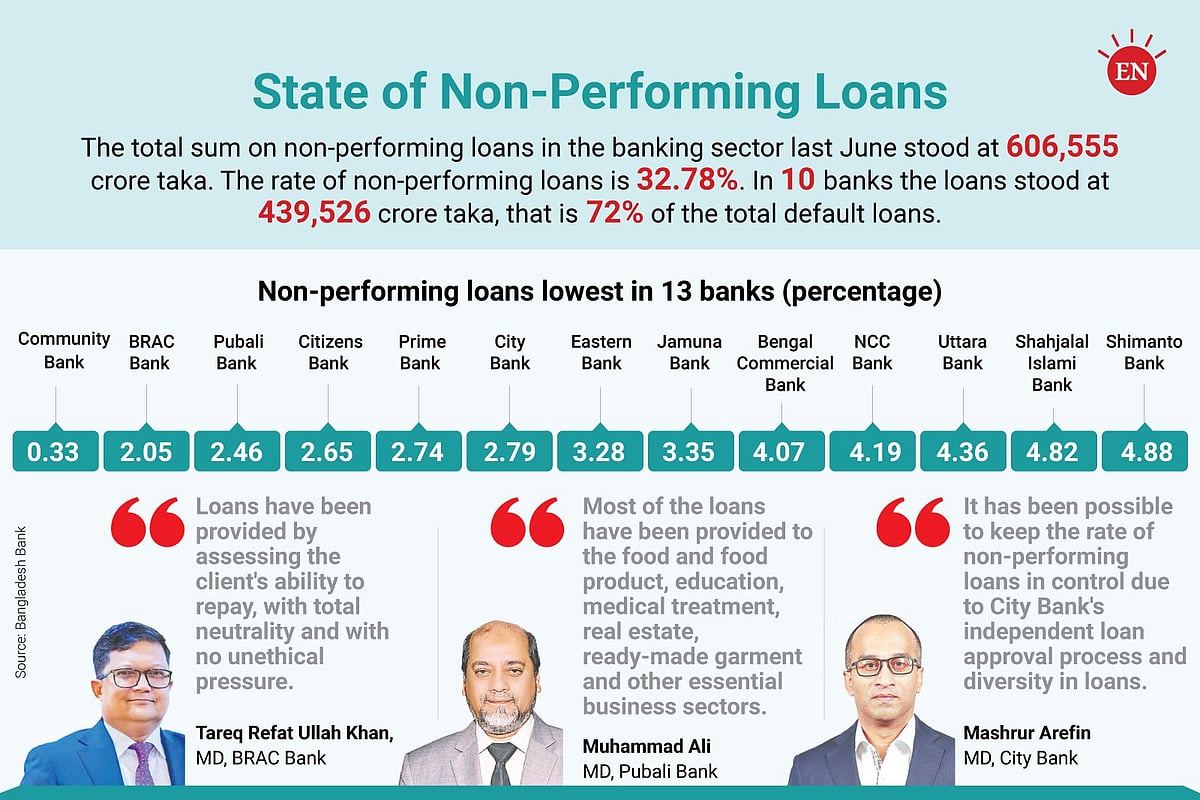
Thirteen banks operating in Bangladesh have maintained non-performing loan (NPL) ratios below 5 percent, according to recent banking sector data, signaling relatively stronger credit quality at these institutions compared to industry peers.
Non-performing loans—advances where borrowers have defaulted on payments for extended periods—serve as a critical indicator of bank health and credit risk management. Banks with lower NPL ratios typically demonstrate more effective lending practices and borrower assessment procedures.
The distribution of NPL ratios among these thirteen banks reveals meaningful variations in asset quality performance. While all institutions have remained below the 5 percent benchmark, the specific rankings indicate that some banks have achieved significantly lower ratios, demonstrating superior credit discipline and borrower monitoring.
The results underscore the importance of prudent lending standards in Bangladesh's banking system. As regulators continue to emphasize capital adequacy and asset quality metrics, banks maintaining lower NPL ratios position themselves more favorably in the competitive financial landscape.
Industry analysts note that managing non-performing loans remains an ongoing challenge for Bangladesh's broader banking sector, with several institutions reporting higher NPL ratios that warrant attention from banking regulators and depositors alike.