World · India Bureau
Tree-dwelling communities maintain ancient lifestyle in Southeast Asia
Several indigenous communities across South and Southeast Asia continue to live in elevated structures built high within forest canopies, maintaining hunting and gathering traditions passed down through generations.
LSN India ·
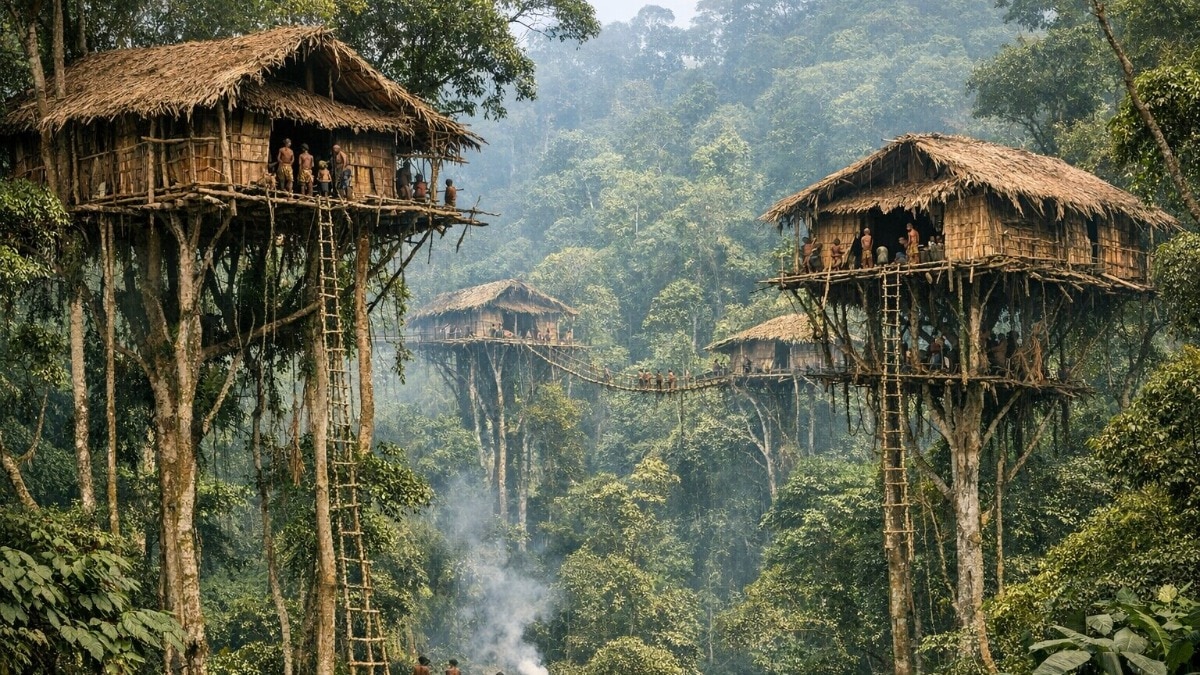
Deep within forested regions of South and Southeast Asia, select indigenous populations have adapted to arboreal living, constructing homes among the upper branches of tall trees rather than on ground level. These communities have developed sophisticated architectural techniques to build sturdy dwellings at significant heights, creating settlements that blend seamlessly with their forest environment.
The practice of tree-dwelling remains intrinsically linked to these groups' traditional subsistence patterns. Members of these communities continue to rely heavily on hunting and gathering to sustain themselves, skills refined over centuries of forest habitation. The elevated settlements provide strategic advantages for hunting expeditions and offer natural protection from ground-level dangers.
These communities maintain distinct cultural practices and knowledge systems adapted to their unique ecological niches. Their settlements reflect deep understanding of forest ecosystems and sustainable resource management, with construction methods and daily routines evolved to minimize environmental impact.
Ancient traditions of arboreal settlement persist despite modernization pressures across the region. Anthropologists and conservationists have documented these remarkable adaptations as examples of human resilience and ecological integration, though such communities face mounting challenges from deforestation and external pressures on their ancestral lands.