World · World News Bureau
UN's top court rules Myanmar committed genocide against the Rohingya
The International Court of Justice found Myanmar's security forces acted with intent to destroy a substantial part of the Rohingya in 2017, the first time the court has held a state responsible for genocide.
LSN World News ·
<p>The International Court of Justice (ICJ) ruled on Thursday that Myanmar committed genocide against its Rohingya Muslim minority during the military's 2017 "clearance operations" in Rakhine state, deciding a case brought by The Gambia in 2019.</p>
<p>Reading the judgment in The Hague, the court's president, Judge Iwasawa Yuji, said the court was "fully convinced" that Myanmar had committed acts covered by the 1948 Genocide Convention with the intent to destroy a substantial part of the Rohingya population in Myanmar, The Guardian reported. The court said the "only reasonable inference" from the evidence of widespread atrocities was that Myanmar's security forces held that intent, according to AP and Reuters.</p>
<p>The court found that Myanmar's security forces killed thousands of Rohingya civilians, carried out widespread sexual violence and acts of extreme violence against children, and attacked Rohingya as they fled in large numbers to Bangladesh. It also found that Myanmar had violated its obligation to prevent genocide, saying it should have known of the risk when armed civilians took part in the campaign, Al Jazeera reported. The reading of the judgment took about three hours.</p>
<p>According to The Guardian, the ICJ has never before found a state responsible for genocide. In 2007 the court held that the Srebrenica massacre was genocide, but found Serbia responsible only for failing to prevent and punish it, not for committing it.</p>
<p>The Gambia, a Muslim-majority West African state, brought the case on the basis that Myanmar breached the Genocide Convention, and asked the court to order an end to any unlawful acts against the Rohingya and the punishment of those responsible. Myanmar has denied genocide and said its operations responded to attacks on police posts by fighters of the Arakan Rohingya Salvation Army.</p>
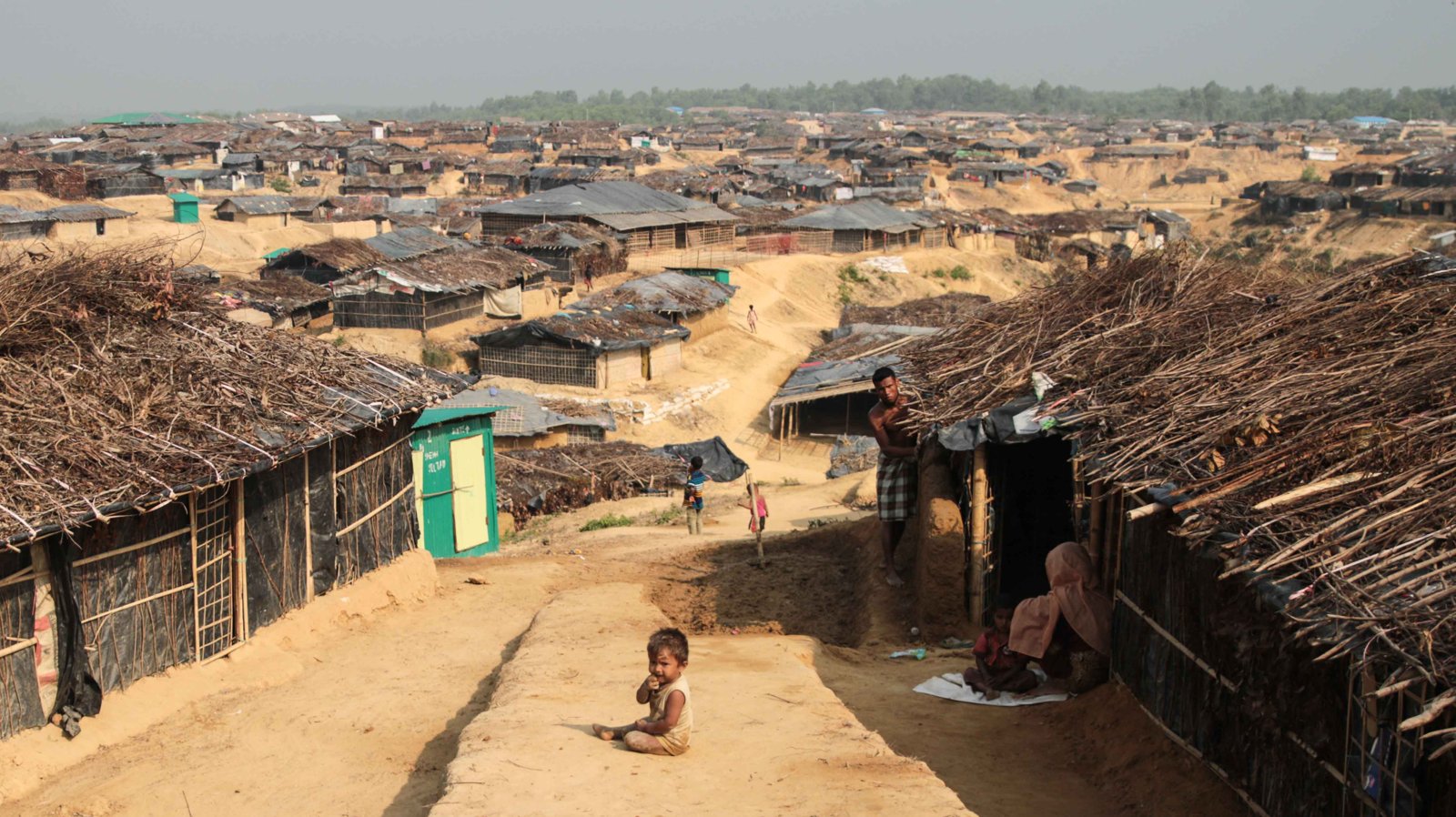
<p>More than 700,000 Rohingya fled into Bangladesh during the 2016-17 crackdown. According to the United Nations, more than 1.3 million Rohingya remain displaced across South and Southeast Asia, including about 1.2 million in camps in Cox's Bazar, Bangladesh.</p>
<p>ICJ judgments are binding, but the court has no means of enforcing them. Its rulings carry diplomatic weight and can shape further international action, including sanctions.</p>
<p>The ICJ rules on the responsibility of states. Min Aung Hlaing, who led the military during the 2017 operations and later seized power in the 2021 coup, faces a separate arrest warrant request at the International Criminal Court, which prosecutes individuals, over alleged crimes against humanity.</p>
<p>Governments have watched the case closely because it is expected to guide how the court approaches other genocide claims, including South Africa's case against Israel over Gaza, The Guardian reported.</p>
<p><em>File photo: Kutupalong refugee camp, Cox's Bazar, Bangladesh. John Owens/VOA via Wikimedia Commons, public domain</em></p>