World · India Bureau
US conservationists submerge 150 trees to create fish habitats
A Nebraska-based conservation initiative has strategically placed 150 trees underwater across two lakes to establish nursery grounds for young fish. The project simultaneously improves fishing access and restores ecosystem balance by addressing overgrown shoreline vegetation.
LSN India ·
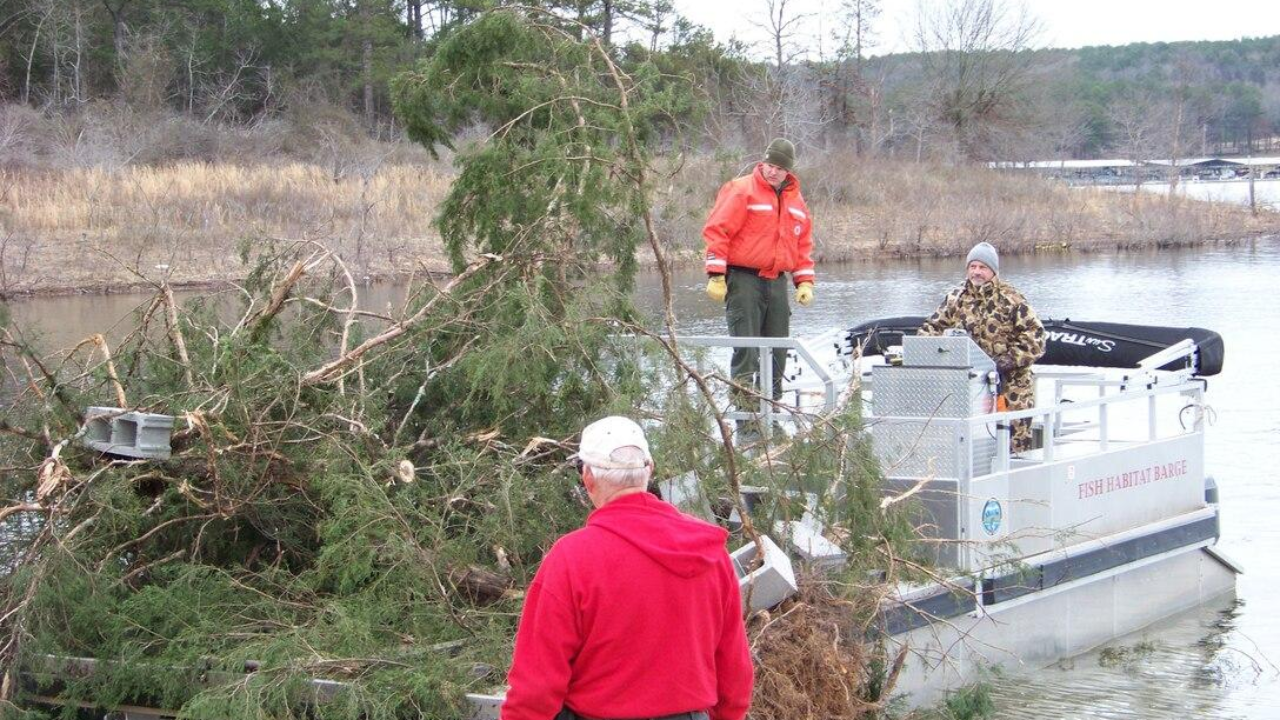
Conservationists in Nebraska have completed an unconventional habitat restoration project, deliberately submerging 150 trees into two lakes to create sheltered environments for juvenile fish populations. The initiative represents a targeted approach to ecosystem management, converting what were previously dense, overgrown shorelines into functional aquatic infrastructure.
The submerged trees serve a dual purpose in the lake ecosystem. They provide protective structures where young fish can grow sheltered from predators while also offering surfaces for aquatic vegetation and microorganisms to establish themselves, creating a more robust food web. This intervention addresses a critical gap in habitat availability that often limits fish population development in managed water bodies.
Beyond ecological benefits, the project has enhanced recreational fishing opportunities. By clearing congested shoreline areas and creating defined underwater structures, conservationists have improved accessibility for anglers while maintaining ecological integrity. The initiative demonstrates how strategic vegetation management can balance environmental restoration with recreational use.
The placement of submerged trees, sometimes referred to as fish cribs or brush piles in conservation terminology, has become an increasingly recognized technique for aquatic habitat enhancement in North America. Nebraska's two-lake project extends this approach at scale, potentially serving as a model for similar initiatives across the region.