Business · Malaysia Bureau
US proposes tariffs of up to 18% on Malaysian goods over 'excess capacity', with 25% possible if talks falter
Washington's trade office named Malaysia among 14 economies facing new Section 301 duties, citing industrial policy, state-backed financing and labour protections. Malaysia rejects the findings, and no duties will apply before public hearings in January.
LSN Malaysia ·
<p>The United States has proposed new tariffs of up to 18 per cent on goods from Malaysia, saying the country's industrial policies and manufacturing practices add to structural excess capacity that burdens American commerce.</p>
<p>The proposal, announced by the Office of the US Trade Representative (USTR) on Wednesday (25 November, US time), follows a Section 301 investigation under the Trade Act of 1974. Malaysia is one of 14 trading partners named in the action, alongside economies including China, Japan, the European Union, Singapore, Indonesia, Thailand and Vietnam.</p>
<p>According to the USTR notice, as reported by Bernama, the 18 per cent rate would be net of any existing Section 301 duties and would carry exemptions for certain products. The USTR said it could instead consider a rate of up to 25 per cent if it judged that ongoing consultations with Malaysia, and Malaysia's commitments under the US-Malaysia Agreement on Reciprocal Trade, were unsatisfactory. DagangNews reported that the proposed exemptions include certain semiconductor, steel and aluminium products already covered by Section 232 duties.</p>
<p>The USTR's findings on Malaysia focused on four areas: industrial and sectoral plans to expand manufacturing and exports, preferential financing through national funding programmes, insufficient action on excess capacity linked to imports and investment from non-market economies, and inadequate labour protections. It singled out information and communications technology and the automotive industry as sectors of particular concern.</p>
<p>US Trade Representative Jamieson Greer said in a statement that many trading partners had for decades pursued industrial strategies that tilted the trade balance in their favour while eroding America's manufacturing base.</p>
<p>The notice also recorded Malaysia's position. The Malaysian government told the USTR that it runs a rules-based trade regime, does not contribute to structural excess capacity, and that its manufacturing ecosystem is critical to global and US supply chains. It said its economy is market-based and that its exports complement, rather than compete with, US domestic production.</p>
<p>The investigation into Malaysia began on 11 March 2026, and bilateral consultations were held on 12 May, but the USTR said they did not resolve its concerns. Reuters, as cited by The Star, reported that Cambodia, Indonesia, Thailand and Bangladesh face the same 18 per cent capped rate.</p>
<p>Interested parties have until 5 January 2027 to file written comments, and public hearings are scheduled to begin in Washington on 25 January 2027. Greer has said the tariffs will not take effect until after the hearing, CNA reported.</p>
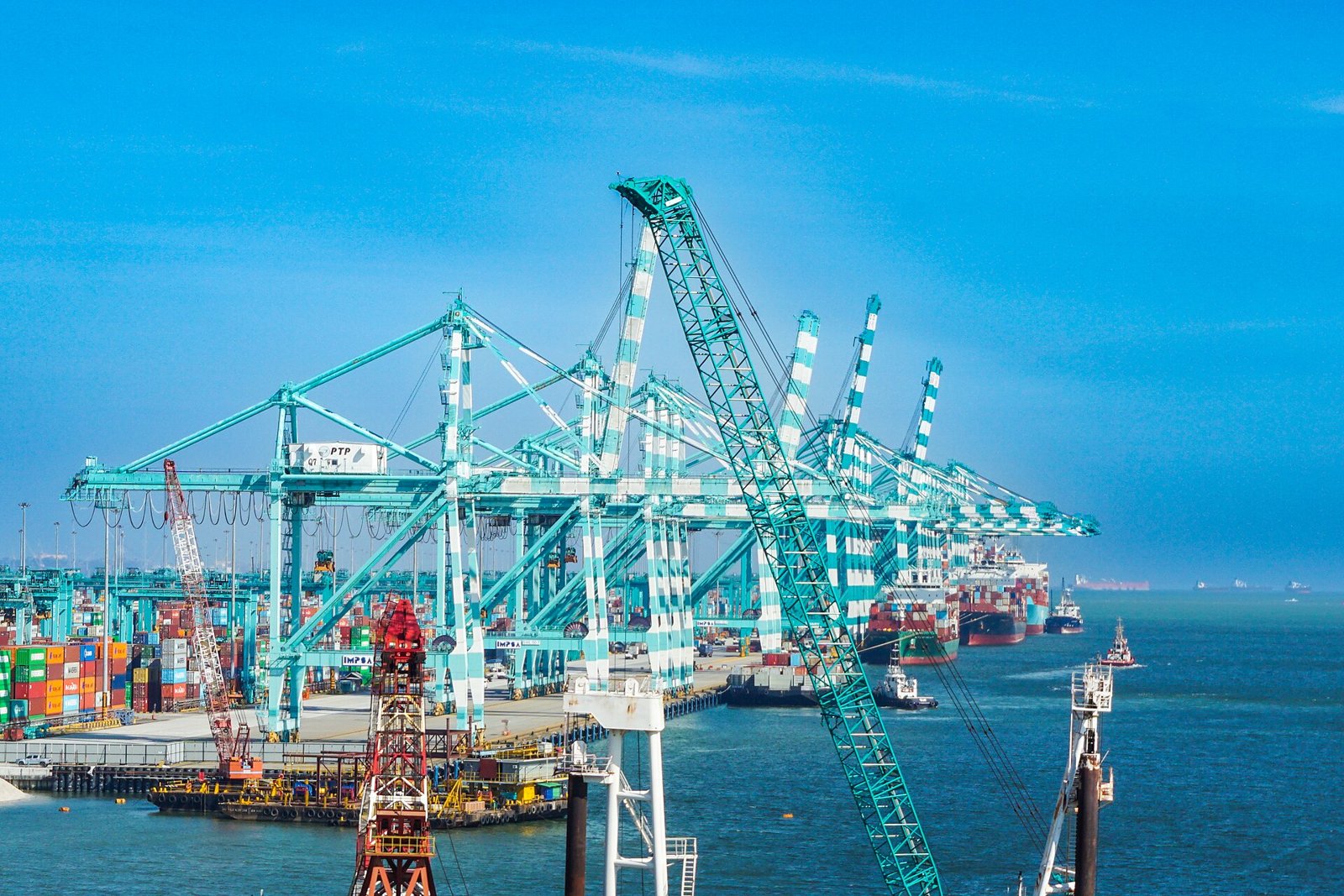
<p><em>Photo: Container cranes at the Port of Tanjung Pelepas, Johor. Chareinity / Wikimedia Commons, CC BY-SA 4.0.</em></p>