Business · Singapore Bureau
US proposes tariffs of up to 20% on Singapore goods over 'excess capacity', 10% if a deal is reached
Washington named Singapore among 14 economies whose industrial policies it says contribute to global overcapacity. The proposed duties would not take effect before a public hearing on 25 January 2027.
LSN Singapore ·
<p>The United States has proposed tariffs of up to 20 per cent on goods from Singapore after concluding that the Republic is one of 14 economies whose policies contribute to structural excess capacity in global manufacturing, the Office of the US Trade Representative (USTR) said on Wednesday (25 November, US time).</p>
<p>US Trade Representative Jamieson Greer determined under Section 301 of the Trade Act of 1974 that the policies in question were "unreasonable" and burdened US commerce, making them actionable. The other economies named are China, the European Union, Switzerland, Indonesia, Malaysia, Cambodia, Thailand, South Korea, Vietnam, Taiwan, Bangladesh, Japan and India. Determinations on Mexico and Norway, which were also investigated, have not yet been made.</p>
<h3>What the proposal means for Singapore</h3>
<p>For Singapore, USTR proposed considering tariffs of up to 20 per cent, net of existing Section 301 tariffs, on all Singapore goods, with exemptions for certain products listed in an annex to its Federal Register notice. It also proposed that the rate could be adjusted to 10 per cent if Singapore reaches an Agreement on Reciprocal Trade with the United States or concludes other negotiations that address the findings, The Straits Times and The Business Times reported.</p>
<p>USTR's findings on Singapore cited industrial plans, what it called financial repression, savings promotion policies that it said suppress domestic consumption, inadequate labour protections, financial support for key sectors, and a failure to address global excess capacity, including through imports and investment from non-market economies. It said the effects were most pronounced in electronics and semiconductors, health and petrochemicals.</p>
<h3>Hearing set for January</h3>
<p>The tariffs are not yet in force. Written comments and requests to appear are due by 5 January 2027, and hearings on the proposed actions will begin on 25 January 2027, according to USTR. Reuters reported that the new duties would not stack on top of separate 10 or 12.5 per cent tariffs imposed under a US probe into forced-labour enforcement, or on sectoral national-security duties on goods such as steel, aluminium and autos.</p>
<p>Across the region, the proposed maximum rates range from 15 per cent for Japan, South Korea, Taiwan, the EU and Switzerland to 18 per cent for Malaysia, Indonesia, Thailand, Cambodia and Bangladesh, 25 per cent for India and 35 per cent for Vietnam if trade talks fail. China would face a capped 20 per cent, rising to 40 per cent if its trade truce with Washington collapses.</p>
<p>The investigation into Singapore and 15 other economies was launched on 11 March 2026. Singapore's trade ministry submitted written comments to USTR on the probe in April. Singapore has a free trade agreement with the US and does not impose tariffs on American imports. There was no public Singapore government response to the proposal as of Thursday morning.</p>
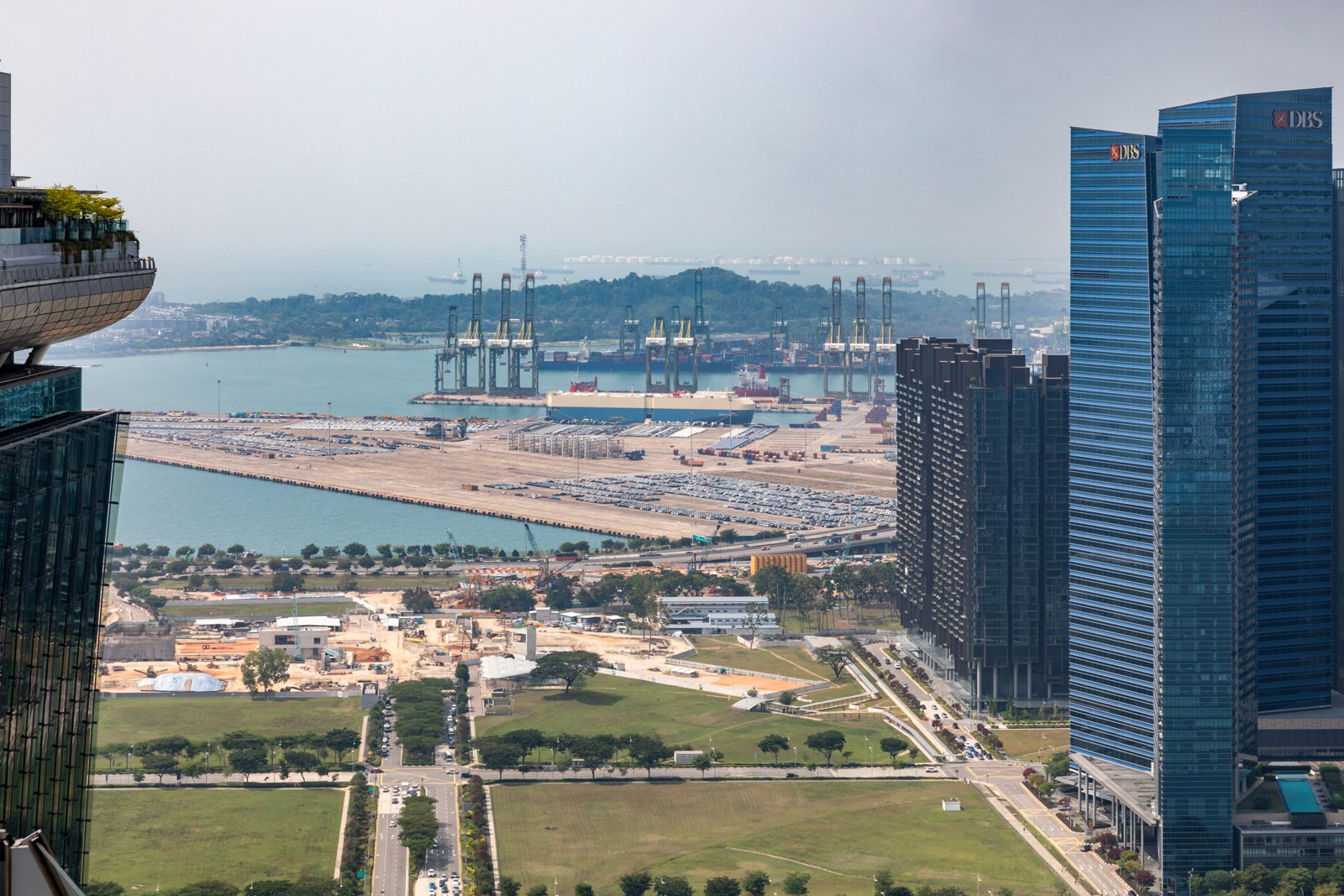
<p><em>Sources: Office of the US Trade Representative; Reuters; The Straits Times; The Business Times; CNA; Lianhe Zaobao; Singapore Ministry of Energy, Trade and Industry. Image: Tanjong Pagar container terminal, Singapore (Dietmar Rabich, Wikimedia Commons, CC BY-SA 4.0).</em></p>