World · World News Bureau
US sanctions Iranian exchange houses and front companies in Dubai, Hong Kong and Turkey in shadow-banking crackdown
The Treasury also published a FinCEN analysis flagging about $14.7 billion in potentially Iran-linked transactions since January 2025, with the largest flagged route running from mainland Chinese banks to banks in the UAE.
LSN World News ·
<p>The US Treasury on Monday, 23 November, imposed sanctions on more than two dozen Iranian exchange houses, front companies and individuals that it said form part of the shadow banking system Iran uses to keep its foreign trade running despite sanctions.</p>
<p>The action, carried out by the Treasury's Office of Foreign Assets Control (OFAC), is part of what the department calls Operation Economic Outcast, a campaign Treasury Secretary Scott Bessent launched in August to cut off Iran's remaining sources of revenue. Reuters reported that the targets included firms based in the United Arab Emirates, Turkey and Hong Kong.</p>
<p>"Iran's shadow banking system is the last financial lifeline of a bankrupt regime," Bessent said in a statement. He said the Treasury would keep dismantling such networks.</p>
<p>According to the Treasury, Iran's shadow banking system is overseen by the Central Bank of Iran and depends on Iran-based exchange houses and so-called "rahbar" companies, affiliates of Iranian banks that manage sanctions-evasion networks for their clients. These work through thousands of front companies abroad, most prominently in Dubai and Hong Kong, the department said.</p>
<p>Among those designated were a rahbar company that Treasury said serves Iran's Bank Sarmayeh, two Iran-based exchange houses, and a group of trading companies in Dubai, one in Turkey and one in Hong Kong that it described as front companies used to process thousands of cross-border payments for Iranian clients. Treasury said one Dubai-based firm had handled payments for the National Iranian Tanker Company, and that another had been used by the National Iranian Oil Company in its oil and petrochemical sales.</p>
<p>OFAC also designated the Iran Center for Exchange of Currency and Gold, which Treasury said matches Iranian exporters earning foreign currency with importers who need it, handling tens of billions of dollars of trade each year. Treasury said the Central Bank of Iran also uses bonds issued by the centre to support trade in Russian roubles and Chinese yuan without relying on the US dollar.</p>
<p>Under the sanctions, any property of the designated people and companies in the United States or held by US persons is blocked, and Americans are generally barred from dealing with them. Treasury warned that foreign banks that knowingly facilitate significant transactions for them could lose access to US correspondent accounts.</p>
<p>Alongside the sanctions, Treasury's Financial Crimes Enforcement Network (FinCEN) released an analysis of reports filed by US financial institutions. It identified about $14.7 billion of activity between January 2025 and August 2026 potentially linked to Iranian shadow banking. The most common flagged routes were from banks in mainland China to banks in the UAE, about $2.6 billion; from Singapore to the UAE, about $981 million; and from the United Kingdom to the UAE, about $922 million.</p>
<p>FinCEN said the networks remained most prominently connected through the UAE, Hong Kong and Singapore, via businesses in oil, shipping, investment and technology procurement. It said the volume of potential shadow banking activity had fallen over the period, which it said might indicate at least partial disruption of Iran's ability to run the networks. It also flagged the potential misuse of companies registered in the Marshall Islands and the British Virgin Islands.</p>
<p>The sanctions come as the United States maintains a naval blockade on Iranian ports and oil exports, while indirect talks between the two countries continue.</p>
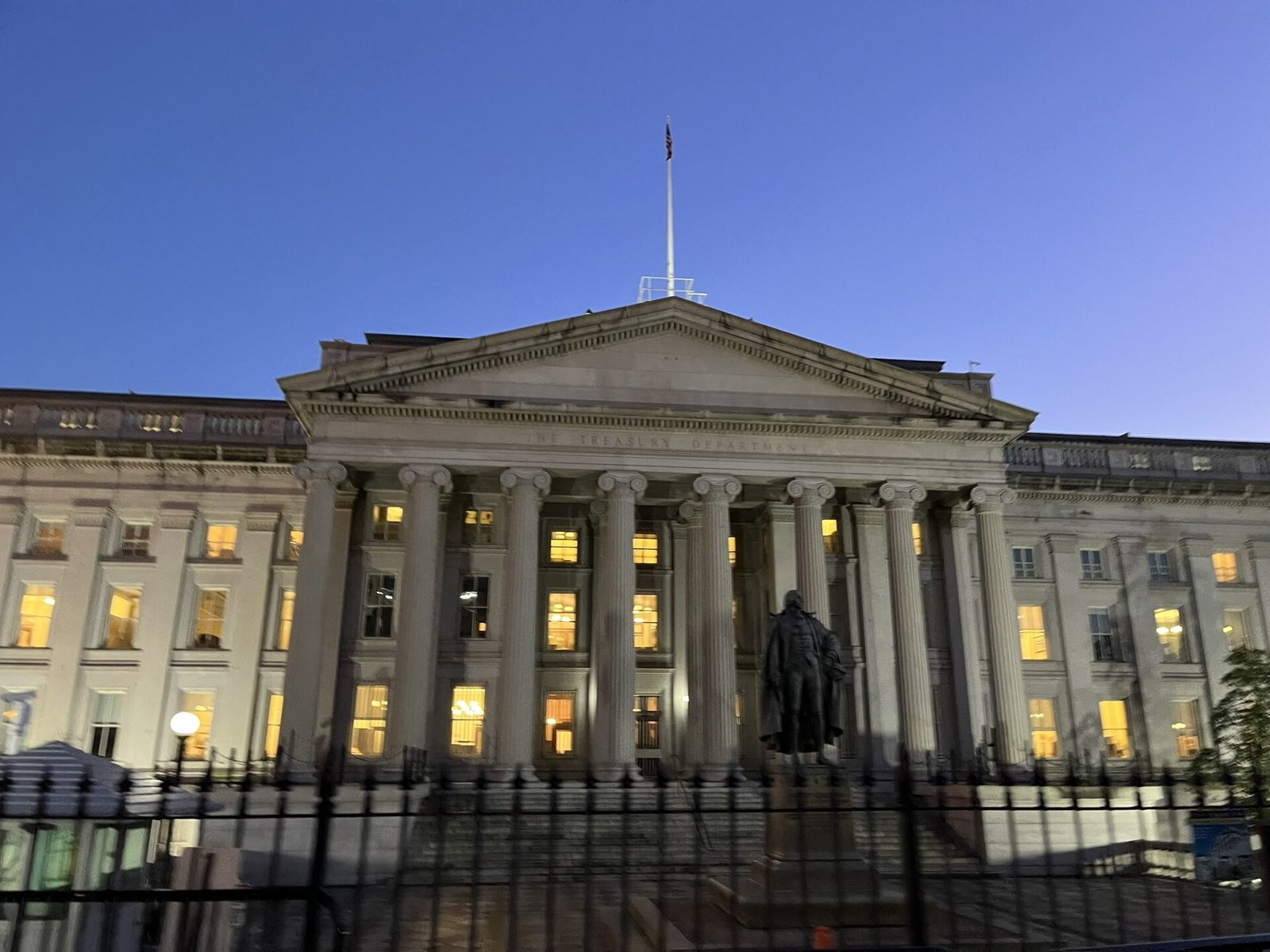
<p><em>The US Treasury building in Washington, DC (file image, 2023). Image: Wisneyykarin via Wikimedia Commons, CC BY-SA 4.0</em></p>