World · India Bureau
US Scientists Track Dye Movement Across Montana River System
A 2010 study by US researchers used dye-tracing techniques to monitor how substances travel through Montana's Missouri River over distances exceeding 66 kilometers. The research provides critical insights into contaminant dispersal patterns across river systems.
LSN India ·
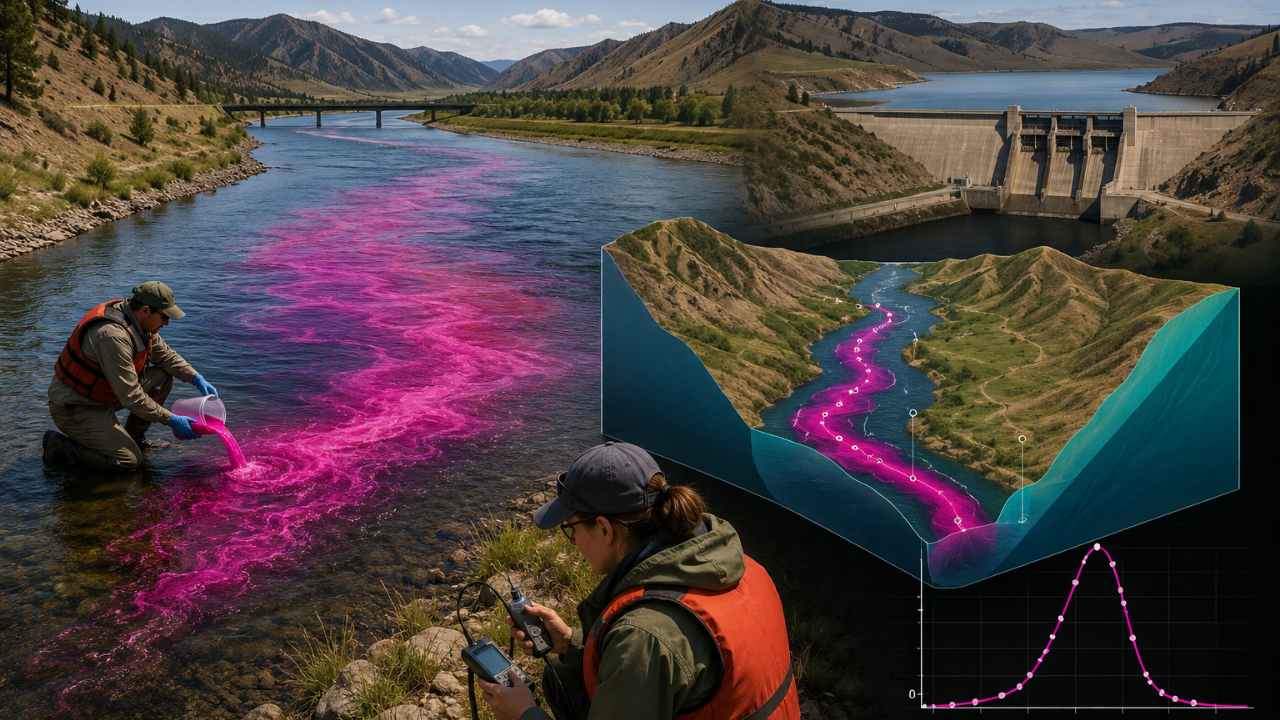
Scientists conducted a comprehensive dye-tracing experiment on Montana's Missouri River in 2010, tracking a fluorescent dye marker across a distance of 41.2 miles to understand how substances move through the waterway. The study examined the behavior of the dye plume as it traveled through different river sections and reservoirs, measuring variations in speed and dispersion patterns across the entire course.
Researchers observed that the dye moved at varying speeds depending on the section of the river it traversed. Notably, when the dye entered a reservoir system along the route, it remained trapped for approximately 8.2 hours before continuing downstream, demonstrating how water storage structures significantly affect contaminant movement patterns.
The experiment measured the lateral spread of the dye plume along the river's direction of flow, providing detailed data on how pollutants and other substances disperse through natural waterways. This information is crucial for water management authorities and environmental agencies tasked with responding to accidental chemical spills or contamination events.
Such dye-tracing studies have become standard tools for hydrologists and environmental scientists across North America, offering predictive models for understanding how hazardous materials might spread through river systems during emergency situations. The Missouri River research contributes to a broader body of knowledge used by water authorities to develop response protocols and mitigation strategies for waterway contamination incidents.