Politics · Vietnam Bureau
Vietnam's NA President visits revolutionary heartland during China tour
Vietnam's National Assembly delegation travelled to Yan'an to explore sites significant to both nations' revolutionary histories. The visit underscores deepening parliamentary cooperation between Hanoi and Beijing.
LSN Vietnam ·
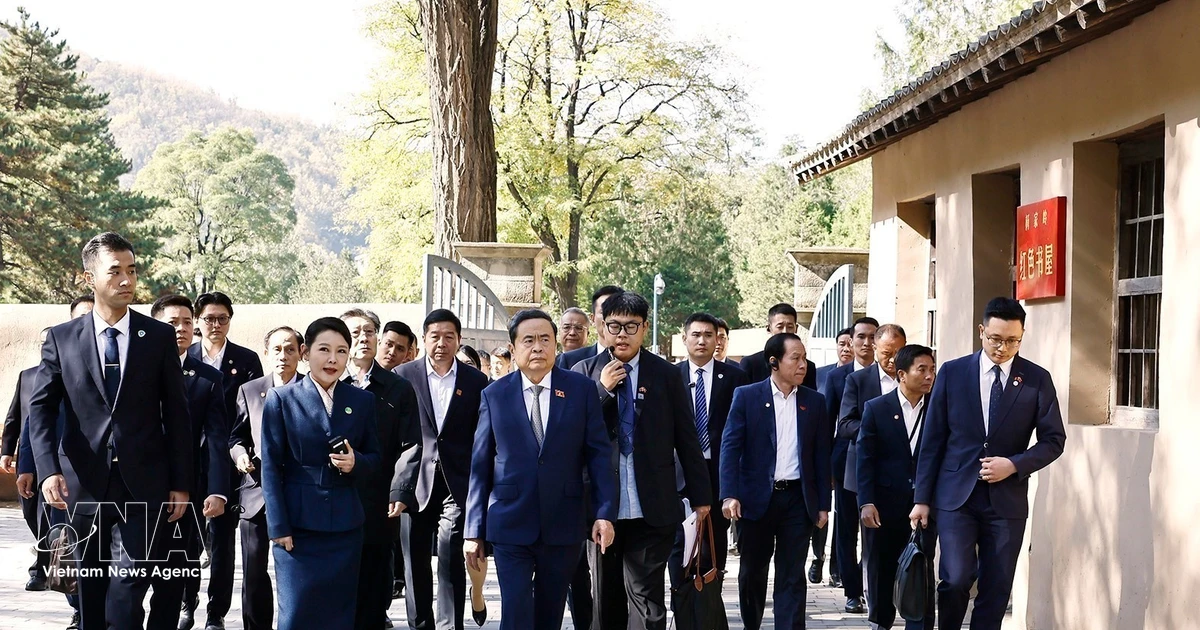
The Vietnamese National Assembly President and accompanying delegation arrived in Yan'an by high-speed rail, visiting a city revered across the communist world as a symbol of revolutionary struggle and ideological steadfastness. Long regarded as the birthplace of China's Communist revolution, Yan'an holds profound historical resonance for Vietnamese leaders tracing the intellectual and political foundations of their own independence movement.
The city carries particular significance in Vietnamese revolutionary history, bearing traces of Nguyen Ai Quoc—later known as President Ho Chi Minh—whose formative years in China shaped both the Chinese Communist movement and the broader international socialist cause. Ho Chi Minh's time in Yan'an and elsewhere in China proved instrumental in developing revolutionary strategies that would later guide Vietnam's struggle for independence and unification.
The parliamentary visit reflects intensifying legislative ties between Vietnam and China, with both nations prioritizing experience-sharing and institutional cooperation. Recent exchanges between Vietnamese and Chinese parliamentary friendship groups have sought to strengthen bilateral relations through sustained dialogue on governance, policy coordination, and strategic alignment.
Analysts suggest that enhanced legislative cooperation serves as a crucial foundation for broader bilateral engagement, enabling both countries to address shared regional challenges while managing complex historical legacies. The visit to Yan'an's revolutionary sites symbolizes both nations' commitment to honoring their shared ideological heritage while building contemporary relationships based on mutual benefit and complementary interests.