World · India Bureau
Volcanic lightning reaches peak intensity over an hour into major eruptions
A new study reveals that volcanic lightning activity follows a distinct pattern during major eruptions, with electrical discharge reaching maximum levels approximately 1.1 hours after initial activity begins. The findings could enhance scientists' ability to monitor and predict volcanic behavior in real time.
LSN India ·
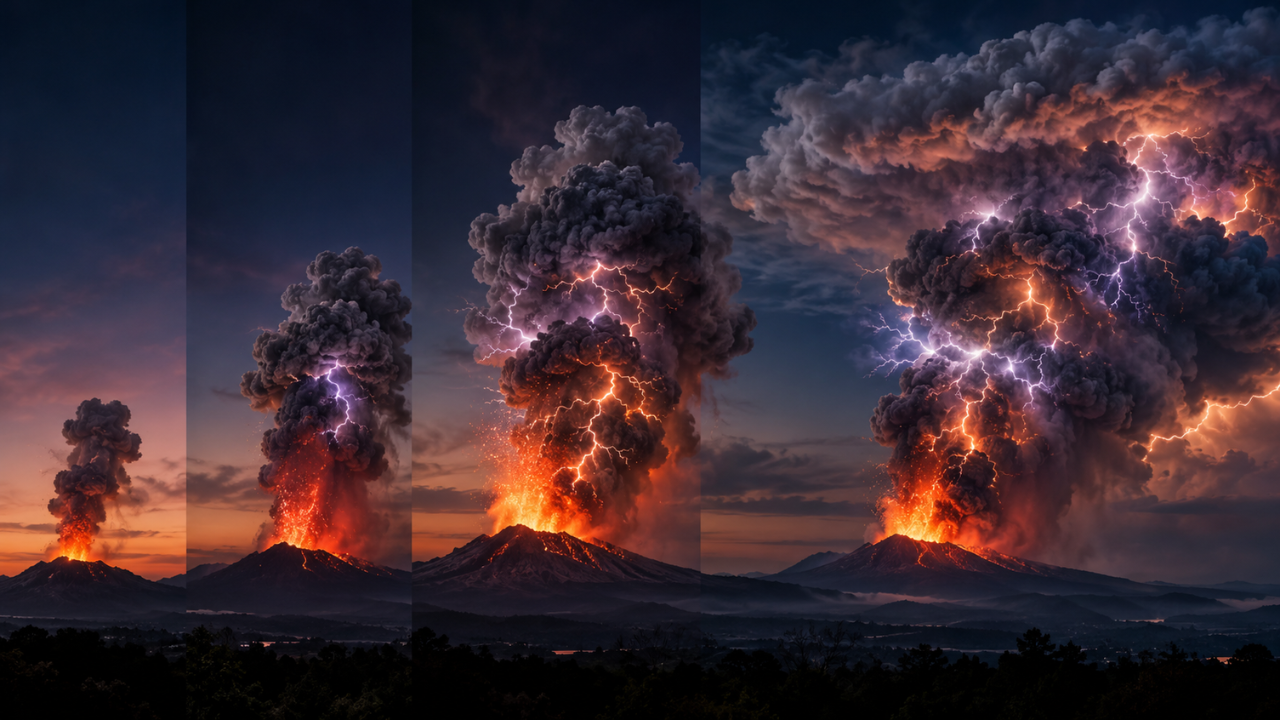
Researchers analyzing data from volcanic eruptions have identified a previously undocumented pattern in the timing of electrical discharge phenomena, showing that lightning activity intensifies significantly during the early stages of major volcanic events.
The study examined multiple eruptions and found that volcanic lightning, which occurs when ash particles collide in the eruption column, does not peak immediately. Instead, the electrical activity builds gradually and reaches its maximum intensity approximately 1.1 hours after the initial flash is detected, according to the findings.
This temporal pattern offers volcanologists a new tool for understanding the dynamics of eruption columns. The electrical discharge is driven by the rapid ascent of ash and gas through the atmosphere, with peak lightning coinciding with maximum vertical development of the volcanic plume.
The research has practical implications for volcanic monitoring systems, which can now incorporate this timing pattern as a predictive marker. By understanding when lightning activity should intensify, scientists can better assess eruption severity and potential hazards, particularly ash distribution and atmospheric effects.
The findings add to growing knowledge about the physical processes occurring within volcanic eruptions and could inform early warning systems for communities in regions prone to volcanic activity.