Politics · India Bureau
West Bengal women escalate protests over Annapurna Bhandar scheme cuts
Women beneficiaries of West Bengal's Annapurna Bhandar welfare scheme have launched escalating protests across the state, blocking roads and railway tracks. The agitation reflects anger over a sharp reduction in scheme eligibility, with approximately 70 lakh fewer women now qualifying despite doubled individual payouts.
LSN India ·
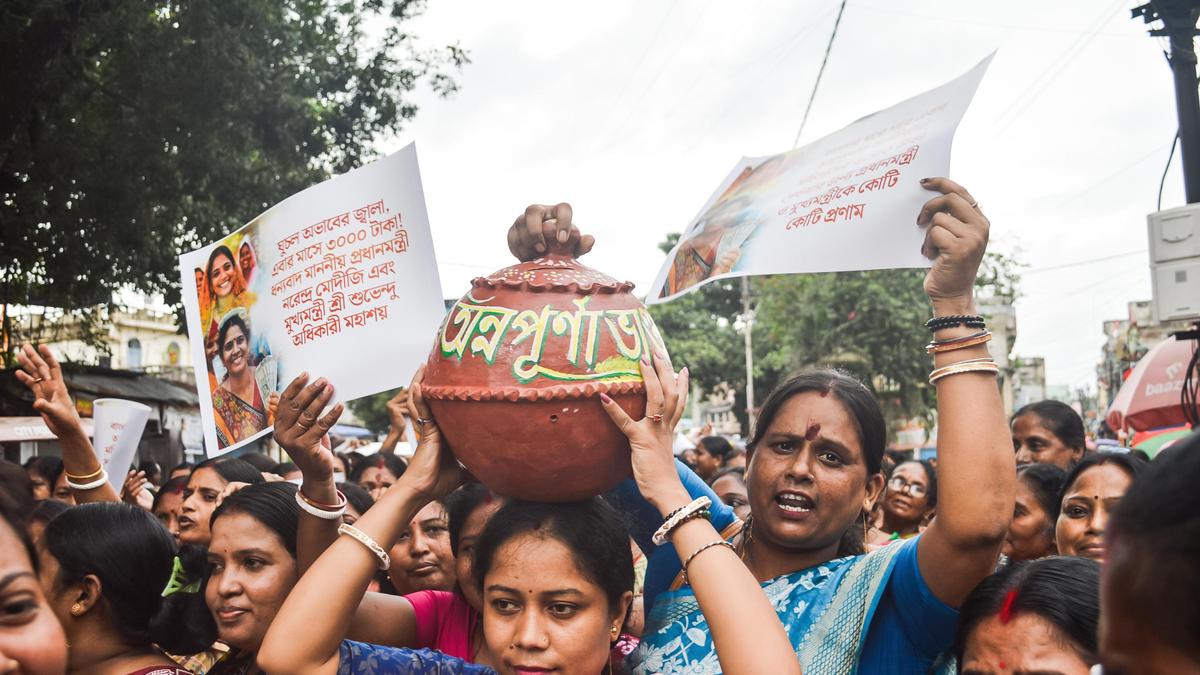
Women beneficiaries of West Bengal's Annapurna Bhandar scheme have launched an escalating campaign of protests, blocking roads and railway tracks while demonstrating outside Block Development Officer offices across the state. The agitation centers on a significant reduction in the scheme's reach, with approximately 70 lakh fewer women qualifying for benefits despite the government doubling individual monthly payouts.
The scheme, designed to provide financial assistance to poor and marginalized women, has become a flashpoint in state politics. The Trinamool Congress government faces accusations from opposition parties of making false promises regarding the program's expansion. Meanwhile, Chief Minister Mamata Banerjee has attributed the protests to political orchestration by opposition groups seeking to destabilize the state ahead of elections.
The contradiction between increased individual payments and reduced overall beneficiaries has fueled public anger, with women's groups questioning whether the revamped scheme genuinely serves the state's poorest populations. Officials have not yet announced plans to address the eligibility criteria or expand the beneficiary base to match pre-revision levels.
The demonstrations underscore growing tension between the state government and beneficiary communities over welfare program implementation. As protests continue to expand geographically, pressure is mounting on authorities to clarify criteria for scheme participation and justify the significant reduction in eligible beneficiaries.