World · India Bureau
Why Cow Dung Forms Heart of Govardhan Puja Tradition
The ritual of crafting a cow dung mountain during Govardhan Puja holds deep religious significance in Hindu tradition. The practice connects devotees to an ancient mythological narrative centered on Lord Krishna.
LSN India ·
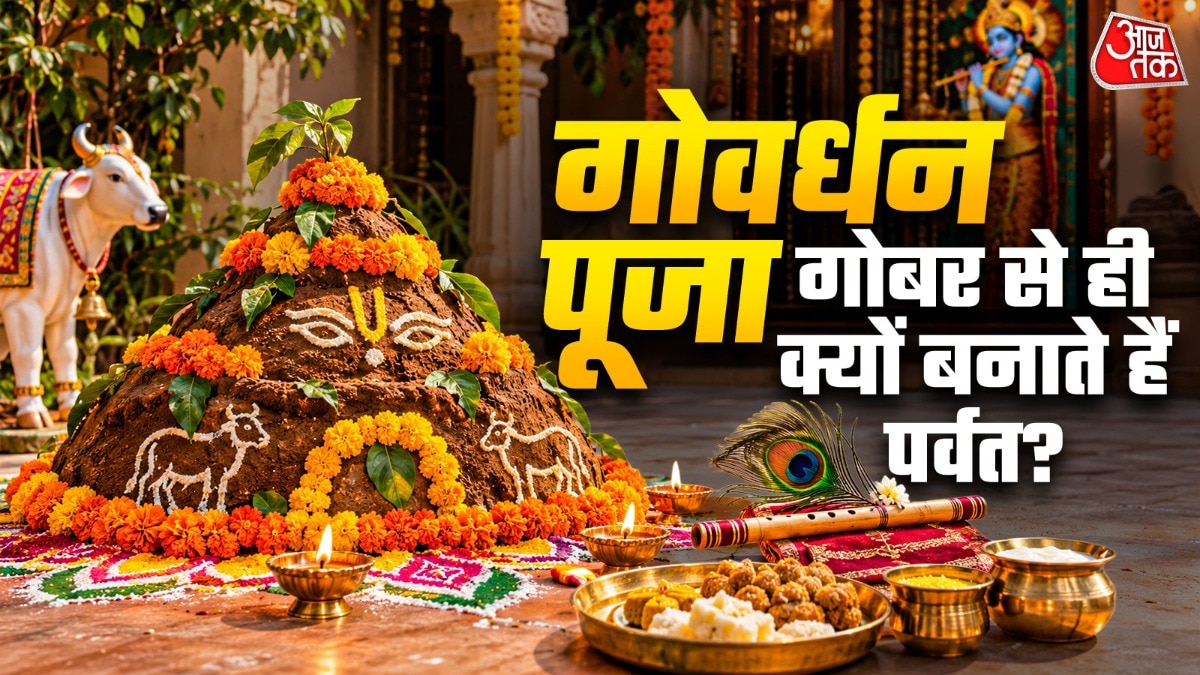
Govardhan Puja, celebrated across India during the Hindu calendar month of Kartik, centers on a distinctive ritual: the creation of a mountain-shaped idol using cow dung. Devotees meticulously mold the sacred material into a representation of Govardhan mountain within their homes, a practice that has endured for centuries across Hindu households.
The tradition draws its significance from the Bhagavata Purana, which recounts how Lord Krishna lifted Govardhan mountain to shield the residents of Braj from devastating torrential rains sent by Indra, the rain god. According to the mythology, the mountain itself became a symbol of divine protection and Krishna's supreme power over nature.
Cow dung holds particular spiritual importance in Hindu ritual practices, considered pure and sanctifying in religious contexts. The use of this material to recreate Govardhan mountain symbolizes the devotee's reverence for both the deity and the bovine animal, which occupies a sacred place in Hindu cosmology. The practice transforms a humble, everyday substance into an object of worship.
Beyond its mythological foundations, the Govardhan Puja ritual reinforces agricultural heritage and ecological consciousness. The festival emphasizes the relationship between humans, livestock, and the natural world, with the cow dung mountain serving as a tangible representation of humanity's dependence on and gratitude toward nature's bounty. This multifaceted tradition continues to connect modern practitioners with ancient spiritual teachings and environmental values.