World · India Bureau
Why your face looks different in photos versus the mirror
The face you see reflected in your mirror daily often appears noticeably different when captured in photographs. Understanding the science behind this common phenomenon can help explain why your nose, face width, or facial length seem to shift between mirror and camera.
LSN India ·
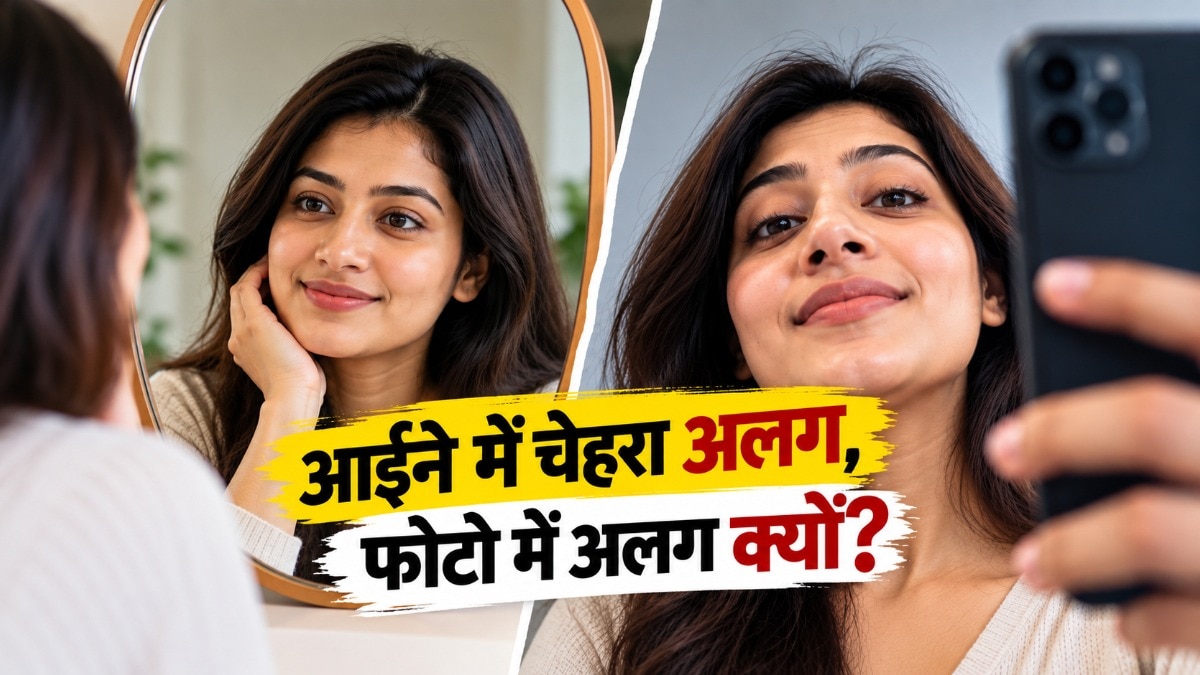
Many people experience the puzzling phenomenon of looking at themselves in a mirror and seeing a face that appears distinctly different from their photographs. In the mirror, features may seem proportionate and familiar, yet the same face can appear broader, longer, or with a larger nose when photographed.
This discrepancy is not due to any actual change in facial structure. Rather, it results from the fundamental differences between how mirrors and cameras capture and display images. A mirror provides a real-time, laterally reversed reflection that your brain has become accustomed to seeing throughout your life. Your mind automatically compensates for this reversal, making the reflection feel natural and accurate.
Photographs, by contrast, present your face as others actually see it—without lateral reversal. Additionally, camera lenses introduce optical distortions that vary depending on the focal length used. Wide-angle lenses tend to exaggerate features closest to the camera, making noses appear larger and faces seem broader. Standard or telephoto lenses create different distortions, sometimes elongating facial features.
Lighting conditions also play a crucial role. Mirrors typically reflect consistent ambient light, while photographs depend heavily on how light strikes the face. Different angles and intensities of light can create shadows that alter how facial proportions appear. The distance between the camera and subject further influences perception; selfies taken at close range with wide-angle phone cameras particularly distort facial features.
Understanding these optical and perceptual factors can help explain why your mirror image and photographs so often tell different stories about your appearance.