World · Vietnam Bureau
Women, children likely helped craft China's ancient terracotta army
A new study of fingerprints on China's 2,200-year-old terracotta warriors suggests that more than half were made by women and children, contradicting long-held assumptions that only adult men created the famous clay figures.
LSN Vietnam ·
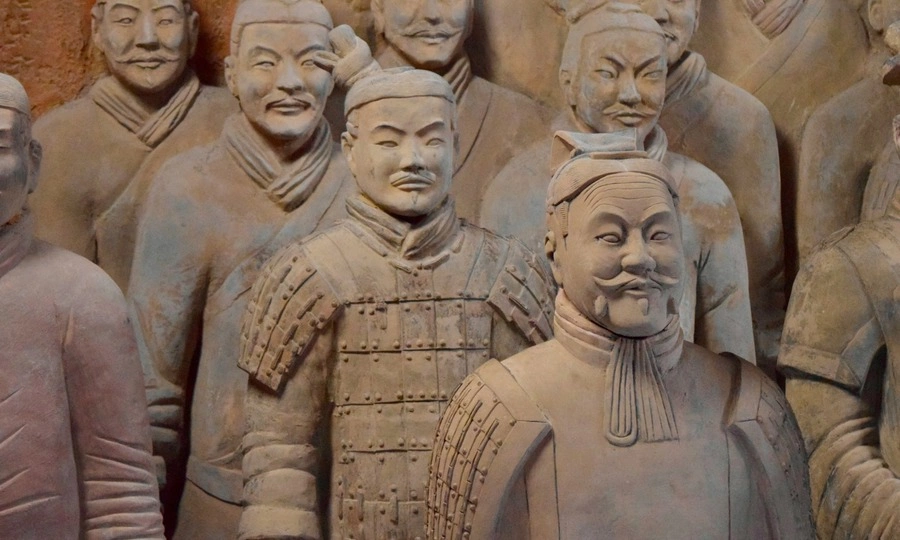
Researchers examining fingerprints pressed into the terracotta warriors discovered during excavations in Xi'an have reached conclusions that challenge conventional understanding of how the monumental figures were produced during China's Qin Dynasty around 2,200 years ago.
The analysis indicates that women and children likely comprised more than half of the workforce responsible for crafting the life-sized clay soldiers. Previously, scholars generally assumed that only trained adult men possessed the skills and strength required to create the thousands of terracotta figures buried with China's first emperor, Qin Shi Huang.
The fingerprints embedded in the clay bodies of the warriors serve as direct evidence of individual workers' involvement in the production process. By studying these distinctive marks, researchers were able to estimate the composition of the workforce and challenge existing historical narratives about ancient Chinese labor practices and craft production.
The findings offer new insights into Qin Dynasty society and manufacturing methods, suggesting that ceramic production involved a broader cross-section of the population than previously believed. The discovery underscores how everyday traces left behind can reveal hidden details about ancient civilizations and the people who created their most enduring artifacts.
The terracotta army, discovered in 1974, consists of thousands of individually crafted warrior figures arranged in battle formation within the mausoleum of Emperor Qin Shi Huang, founder of unified China.